
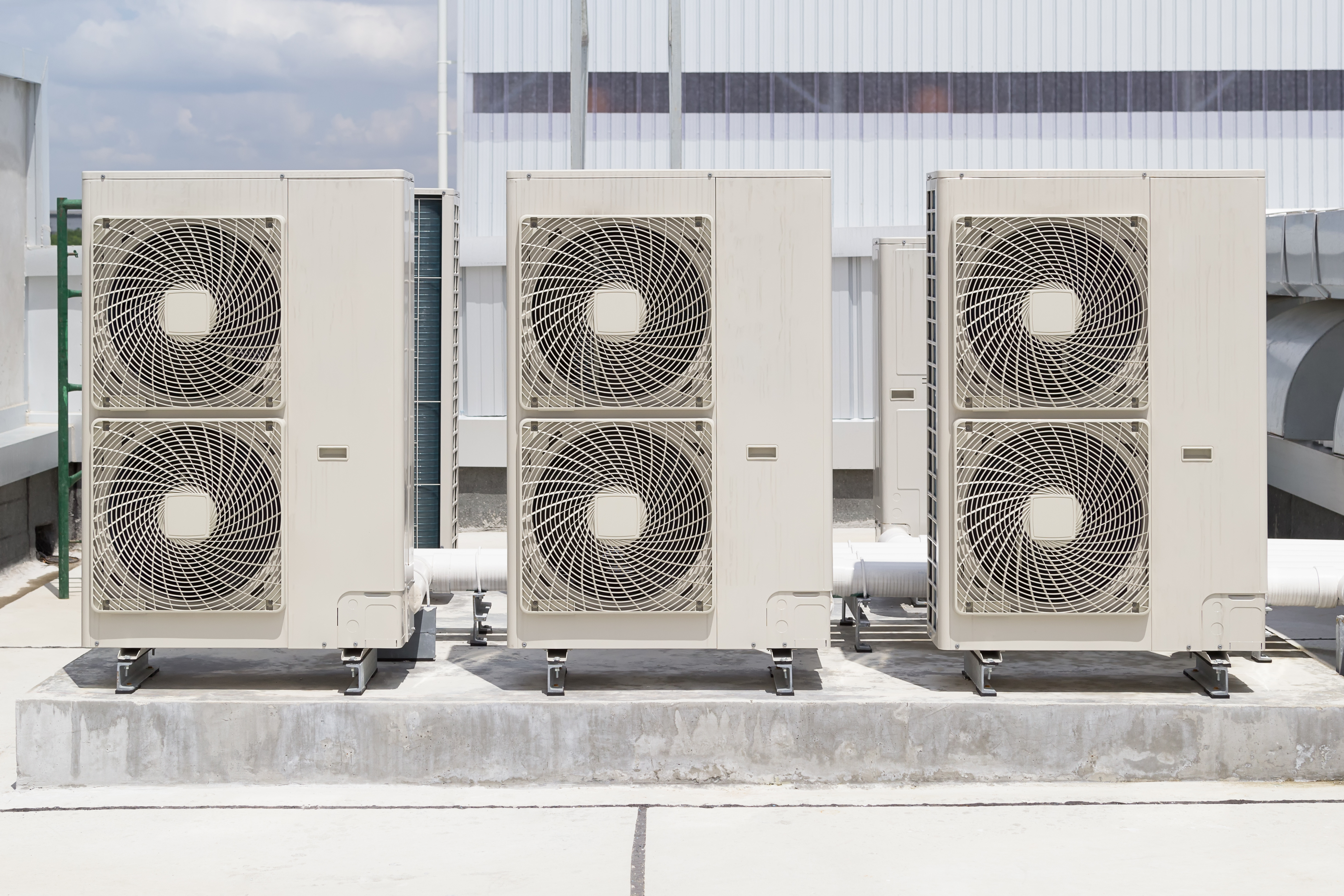
Choosing between a VRF (variable refrigerant flow) system and packaged or ducted units is one of the first big mechanical decisions on a commercial fit-out or upgrade. Both work well in the right building. The wrong choice usually shows up later — in comfort complaints, running costs or a plant replacement that’s harder than it needed to be.
Here’s how we compare them with clients.
How each system works
Packaged and ducted split units use one outdoor unit serving one indoor unit or air handler, with ducted air delivered to a zone. They’re simple, familiar and easy to replace like-for-like.
VRF systems connect many indoor units — cassettes, ducted units, wall units — to one or more outdoor units through refrigerant pipework. Each indoor unit is controlled individually, and heat-recovery versions can heat some zones while cooling others.
Where VRF tends to suit
- Buildings with many small zones — offices with meeting rooms, medical suites, hotels, education buildings
- Sites with varying loads across the day, such as perimeter offices facing different directions
- Projects where plant space is limited and long duct runs are hard to fit
- Tenancies that need individual control and, often, separate energy metering
Where packaged or ducted units tend to suit
- Large open spaces with similar loads — retail floors, warehouses, gyms, open-plan offices
- Projects where simplicity and like-for-like replacement matter most
- Sites with a strong ventilation or outdoor-air requirement handled through ductwork
- Buildings where maintenance staff are already familiar with packaged plant
The questions that decide it
Rather than starting with equipment, start with the building:
- How many zones need independent control, and how different are their loads?
- What are the ventilation and outdoor-air requirements for the space?
- Where can outdoor plant go, and how long are the pipe or duct runs?
- Who will operate and maintain the system, and how will tenants be billed?
- What is the expected life of the fit-out, and how will the plant be replaced?
Refrigerant charge, pipe lengths and leak detection also need to be considered with VRF in small occupied rooms, and should be addressed in the design against the applicable standards.
Getting the design right
The best outcomes come from a proper load calculation and design rather than a rule of thumb. Where a project needs design documentation, our associated consulting brand Air Theory provides mechanical design, and Treadies installs and maintains the system. As a Mitsubishi Electric Diamond Dealer we supply and install both City Multi VRF and packaged systems.
See our VRV/VRF services or get in touch to talk through your project.